
This course is due to run next in September 2027. It is not part of our undergraduate open day.
BSc Nursing (Earn as you Learn) *
Interested in studying a nursing degree in 2027? Register your interest today!
If you are already working in a nursing and social care role and are interested in pursuing a nursing degree, this new four-year BSc Nursing (Earn as You Learn) course will enable you to become a fully registered nurse with the Nursing and Midwifery Council (NMC), whilst you continue in your current role.
This innovative course is tailored for those employed in an NHS Health Board or social care sector who hold a Professional Development Award (PDA) in Acute and Community Care Level 8 qualification. By allowing you to continue working while studying, the course offers a unique opportunity to earn while you learn. At the same time, you learn, opening the door for those who may not previously have had the chance to pursue a full nursing degree. With course fees covered by the Scottish Government, the initiative successfully breaks down financial barriers for those keen to transition into a degree-level nursing post.
It is designed for career growth and combines on-campus in-person teaching, online learning sessions, and self-directed study. This blended course offers the flexibility working professionals need, enabling you to balance academic study with ongoing employment.
The course will allow you to enhance your professional practice, transition into higher-grade nursing posts, and increase your earning potential.
Please note we cannot sponsor students on a Student visa to study this course.
*Subject to validation
Why QMU?
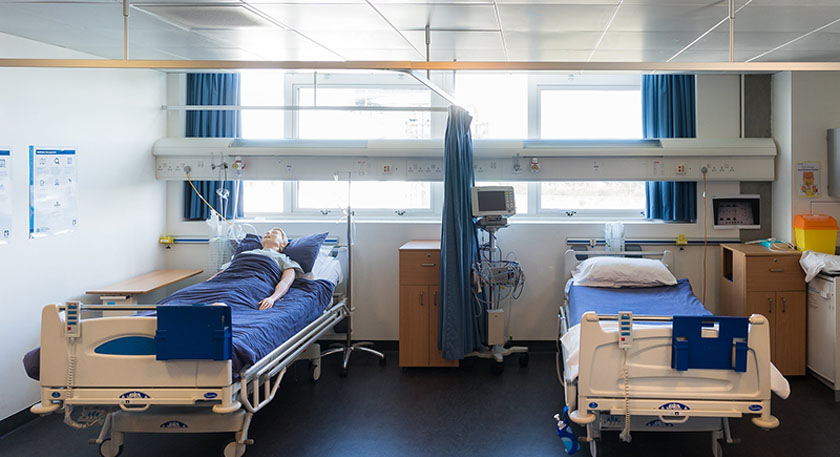
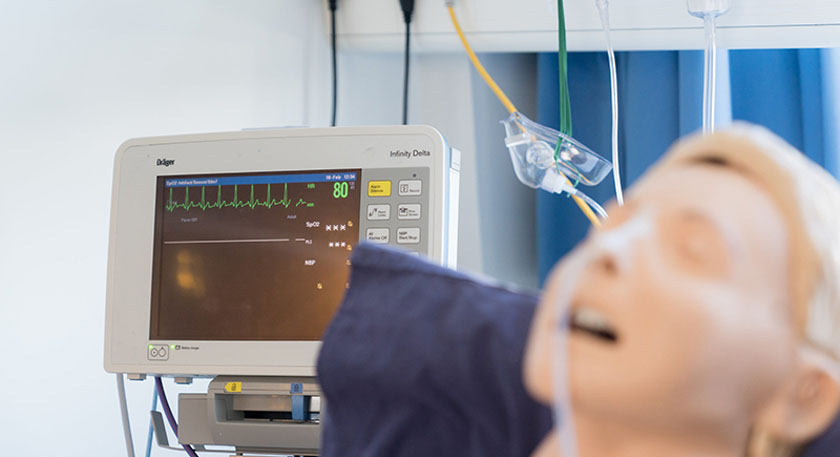
- Specialist facilities to enhance your learning: Your theoretical learning will be complemented with practice in our Clinical Simulation Suite and in a variety of health and social care settings.
- Supportive learning environment: Small classes mean you will benefit from individual support from our highly experienced course team.
- Creative learning and teaching methods: In our approach to learning and teaching, we use a range of creative ways to promote self-development and skills for interacting with others.
- Professional recognition and registration: The course is approved by the Nursing and Midwifery Council (NMC). Successful completion leads to eligibility to register (Registered Nurse {Adult}) with the Nursing and Midwifery Council. NMC.
- A university with highly ranked nursing provision: In The Times and Sunday Times Good University Guide 2026, QMU ranked 15th (out of 80) for Nursing. In the Guardian Good University Guide 2026, 3rd (out of 8) for General Nursing. In the Guardian Good University Guide 2026, 3rd (out of 8) for General Nursing.
Take a quick-fire look at the BSc Nursing (Earn as You Learn):
The course content aligns with the NMC Standards for Future Nurse Education and is underpinned by person-centred and humanistic values. On completion of the course, you will be able to register with the NMC and practice as a nurse.
On this course you will:
- become confident to deliver safe, effective and person-centred nursing care;
- become part of a community of learners, working collaboratively with lecturers, clinical staff, service users and other students on a transformational journey towards registration;
- actively engage in creative and critical ways of working and learning, including approaches such as critical inquiry, reflection, contemplation, simulation and practice learning experiences; and
- carry out invaluable practice learning experiences (PLEs) that will enrich your learning.
We offer the following four routes to a nursing degree:
- BSc Nursing (3 years)
- BSc (Hons) Nursing (4 years)
- Master of Nursing (4 years)
- BSc Nursing (Earn as you Learn) (4 years)
Structure
This is a four-year BSc Nursing (Earn as you Learn) degree course. Over the four years you will complete a total of 4,600 hours of theory and practice experience which is split equally. You will complete 90 academic credits each academic year and exit with a BSc level Nursing degree and you would also be able to register as an Adult Nurse.
Teaching, learning and assessment
Our aim in developing this course has been to use a range of creative ways of teaching and learning to promote self-development and the skills for interacting with others. You will be facilitated to learn in lectures, seminars, practical laboratories and have practice learning experiences. Outside of timetabled sessions, you will be expected to continue learning through self-study.
We aim to include creative ways of assessment that may involve student choice. Assessments include practical and written exams, assignments and group work.
Placements (Practice Learning Experience)
A Practice Learning Experience (PLE) is offered each year. PLEs provide the opportunity to integrate theory and practice by working directly with people in whichever setting they are.
PLEs can be in a variety of settings such as the community area, a hospital or care home. These may be in the Lothians, Borders and Fife. Lecturing staff at QMU manage the allocation of PLEs.
You will not receive a PLE in your specific place of employment (eg the same ward or care home etc.).
The teams are always looking at widening opportunities for you and we are increasing the variety of available PLEs.
Please note that there are additional costs associated with placements. Please see the ‘Other fees’ section under the ‘Entry requirements’ tab for more details.
Teaching staff, class sizes and timetables
You can read more about the teaching staff on this course at the bottom of this page. Please note that teaching staff is subject to change.
For more information, please also visit ‘How we teach and how you’ll learn’.
Year One
You will:
- describe the principles of person-centred practice and understand the contribution of self in developing relationships with persons, families, colleagues, and communities;
- understand principles of reflection and communication to work collaboratively and effectively with people to promote health and wellbeing;
- understand the concepts of health and well-being across the lifespan in/for persons, families, and communities;
- identify and explore a range of theories, science, and knowledge to support the assessment, planning, implementation, and evaluation of nursing care;
- safely participate in practice learning under supervision and reflect on a range of learning experiences;
- understand the importance of evidence-based practice and research that informs and advances nursing care;
- recognise the importance of effective partnerships with people, families, carers, and colleagues;
- understand the concept of health improvement at local, national, and global levels; and
- recognise the contribution of other health and social care professions to enable safe and effective person-centred care.
You will study the following modules:
- Applied Biosciences for Nursing Practice 1: This year-long module allows you to develop key knowledge of the principles of anatomy, physiology, pathophysiology, pharmacology and applied nursing skills for practice. You will develop and apply an understanding of the principles of health and illness, gaining the basic knowledge and skills to support the assessment of patients’ health and well-being needs for optimal person-centred nursing care.
- Exploring the Theories and Art of Nursing: In this module, you will start to explore the theoretical concepts that inform your practice with people across the lifespan. You will also explore your professional identity, considering accountability, communication, reflection and being a lifelong learner.
- Introduction to Evidence-Based Practice: In this module, you will build essential academic skills, including effective searching of academic databases and appraisal of diverse sources of evidence. The module also focuses on enhancing academic writing by exploring and practising different styles suited to professional and scholarly contexts. In addition, it will support you in developing your learning skills by integrating your knowledge from other modules and through practice.
Year Two
You will:
- apply the principles of person-centred practice and understand the contribution of self and others in developing intrapersonal and interpersonal relationships;
- apply principles of reflection and communication to work collaboratively and effectively with people to promote health and wellbeing;
- explore the role of the nurse in maintaining health, preventing ill health and health inequalities;
- use a range of theories, science, and knowledge to support the assessment, planning, implementation, and evaluation of nursing care;
- safely contribute to care within practice learning environments, including demonstrating situational awareness and communication of escalation of potential risk;
- demonstrate effective connections and partnerships with people, families, carers, and colleagues;
- demonstrate how health improvement can be applied at local, national, and global contexts through collaborative care; and
- demonstrate knowledge of other health and social care professions to deliver safe and effective person-centred care.
You will study the following modules:
- Analysing the Theories and Art of Nursing: You will further develop a critical understanding of the theoretical concepts that underpin our practice, challenging assumptions and learning from other disciplines. You will consider the range of skills required to support the ongoing development of nursing as a safety-critical profession, reflecting on perspectives from political, media and practice arenas
- Applied Biosciences for Nursing Practice 2: This year-long module allows you to develop key knowledge of the anatomy, physiology, pathophysiology and related pharmacology of identified body systems. It will build on current knowledge and skills to enable assessment, planning, and the implementation of high-quality, holistic, person-centred care. The module will enable you to develop and apply an understanding of the principles of individual and population-based health and illness, to support assessment of health, well-being and health promotion needs for optimal person-centred nursing care.
- Developing Professional Practice: You will use your academic and practice knowledge to develop your understanding of organisational culture within health and social care. This module will enable you to explore quality improvement, leadership and health and social care policies.
Year Three
You will:
- practice critical reflection, reflexivity, and communication to work collaboratively and effectively with people to promote health and wellbeing;
- critically analyse approaches to local, national, and global health, and contribute to the support and well-being of vulnerable individuals and groups;
- appraise theories, science, and knowledge to contribute to judgment and decision making in/of contemporary nursing care;
- critically reflect on practice and appraise own and others' practice and care delivery;
- examine and analyse the contribution of health improvement at local, national, and global contexts through collaborative care across a range of health and social care disciplines;
- critically analyse the skills and expertise of other health and social care professions to implement safe and effective person-centred care; and
- describe how evidence-based and research practice informs nursing care.
You will study the following modules:
- Applied Biosciences for Nursing Practice 3: This year-long module allows you to enhance and critically apply knowledge of normal anatomy, physiology and pharmacology to develop your understanding of the pathophysiological processes and treatment of serious and critical illness and identify person-centred nursing implications. Developing advanced clinical nursing skills will enable you to plan, assess, escalate, implement, and evaluate person-centred care.
- Applying the Theories and Art of Nursing: You will use the knowledge you have developed in years one and two to critically evaluate nursing theory and philosophy alongside theories from other disciplines to promote rights-based, person-centred care in all fields of practice and in a variety of contexts.
- Advancing Evidence Based Practice: This module will enable you to critically appraise and review different forms of knowledge, strengthening their understanding of evidence-based practice. Emphasis is placed on exploring how research and evidence inform clinical decision-making and enhance patient care.
Year Four
You will:
- critically reflect on the impact of teams and cultures on the implementation of person-centred practice;
- analyse and evaluate the importance of evidence-based practice and healthcare research in delivering safe nursing care;
- analyse facilitation approaches to establishing effective partnerships with people, families, carers and colleagues;
- be a reflexive practitioner and practice person-centred communication skills to work collaboratively and effectively with people to promote health and well-being; and
- exercise autonomous professional and evidence-informed judgement and decision making in multidisciplinary contexts.
You will study the following modules:
- Preparation for Professional Registration in Nursing: This module will prepare you to enter the Nursing and Midwifery Council’s (NMC) register as professional and autonomous nurses. You will analyse and synthesise nursing theories and a range of educational methodologies to critically evaluate your scope of practice.
- Nursing Research 2 - Understanding and Critiquing Evidence and Knowledge to Develop Nursing Practice: This module enables you to develop your understanding of evidence and knowledge in relation to developing nursing practice.
- Nursing Research 3 - Understanding and Critiquing Evidence and Knowledge to Develop Nursing Practice: This module is about applying research knowledge and skills in relation to advancing nursing practice.
- Quality Enhancement in Clinical Nursing Practice: This module will support you to apply your academic and practice knowledge to develop your understanding of organisational culture within health and social care. You will explore quality improvement, leadership, teams, and Evidence-Based Practice: This module will enable you to critically appraise and review different forms of knowledge, strengthening your
This course will give you the confidence and expertise you need to succeed in the field of nursing that you choose. Your professional and graduate prospects will be excellent. You will have a diverse range of career options in the UK and overseas.
QMU nursing graduates are working in a range of diverse clinical practice settings, for example, acute medical and surgical areas, long term, community and rehabilitation contexts. Many have forged careers outside of the traditional hospital setting by working in the Armed Forces, in research, leadership and education roles. You can also advance your nursing career through postgraduate studies, although postgraduate courses typically require some time in practice first.
Successful completion leads to eligibility to register (Registered Nurse {Adult}) with the Nursing and Midwifery Council) NMC.
Entry requirements
Eligibility: NHS or social care employees with a Professional Development Award (PDA) in Acute and Community Care - Level 8.
Employer Support: Candidates must be supported by their employer to undertake this course.
Direct Entry: Direct entry to Year Two is available.
The entry criteria are as follows:
- Professional Development Award (PDA) Acute and Community Care, Level 8
- You must have completed minimum 400 accredited practice learning hours, subject to completion of the following two QMU modules already approved by the School Academic Board of Health Sciences (HSSAB):
o Strengthening Skills: Academic Reading and Writing for Nursing, equivalent to 20 credits at SCQF 7
o Introduction to Applied Biosciences for Nursing Practice, equivalent to 40 credits at SCQF 7
Other requirements
Interview: You will be required to take part in an interview as part of the application process.
Disability/health conditions
If you have a disability, long-term physical or mental health condition, or learning disability, it should not stand in the way of your studying at QMU. However, if you are not sure whether your disability might be a barrier in your studies or in relation to the professional standards, please contact the Disability Service who will be able to have a conversation with you about reasonable adjustments and supports available to you.
Fee information
Fees: The fee for this course is covered by the Scottish Government.
Other costs:
- The cost of professional indemnity insurance is your responsibility.
- You will be required to pay any additional costs associated with placement travel and accommodation. If you receive SAAS funding you may be able to claim for some of these expenses to be reimbursed.
- Uniform, PVG and name badge costs.
For more information on other costs, please visit the UG 2027 fees page.
Application information
How to apply: Please contact Karen Rennie for more information on application.
QMU
Please contact Karen Rennie in the first instance for any queries that you may have about this course.
- The delivery of this course is subject to the terms and conditions set out in our 2027/28 Entry Applicant and Student Terms and Conditions (Undergraduate).
- The course information on this page is correct at the time of posting (March 2026) but may differ slightly for 2027 entry. Please check back here for updates.
Become your best you: study at QMU
Images: The images below are of our Clinical Simulation Suite where our Nursing students prepare for practice.
Course Overview
Opportunities to meet us: open days and more
As well as open days, we offer campus tours and online events throughout the year to help you find out more about student life and studying at QMU.
Open days and other ways of meeting us: more informationCollege Leavers and Mature Students
Courses You Might Also Like
- BSc (Hons) Nursing (2027 entry)
- Master of Nursing (2027 entry)
- BSc Nursing (2027 entry)
- Master of Dietetics/BSc (Hons) Dietetics (2027 entry)
- BSc (Hons) Nutrition (2027 entry)
- Master of Occupational Therapy
- BSc Paramedic Science (2027 entry)
- Master of Physiotherapy/BSc (Hons) Physiotherapy (2027 entry)
- Master of Podiatry/BSc (Hons) Podiatry (2027 entry)
- Master of Diagnostic Radiography/BSc (Hons) Diagnostic Radiography (2027 entry)
- Master of Radiotherapy and Oncology/BSc (Hons) Radiotherapy and Oncology (2027 entry)
- BSc (Hons) Occupational Therapy (2027 entry)
- BSc (Hons) Speech and Language Therapy (2027 entry)


