Marching forward: How a nurse’s life has been transformed by a pair of shoes
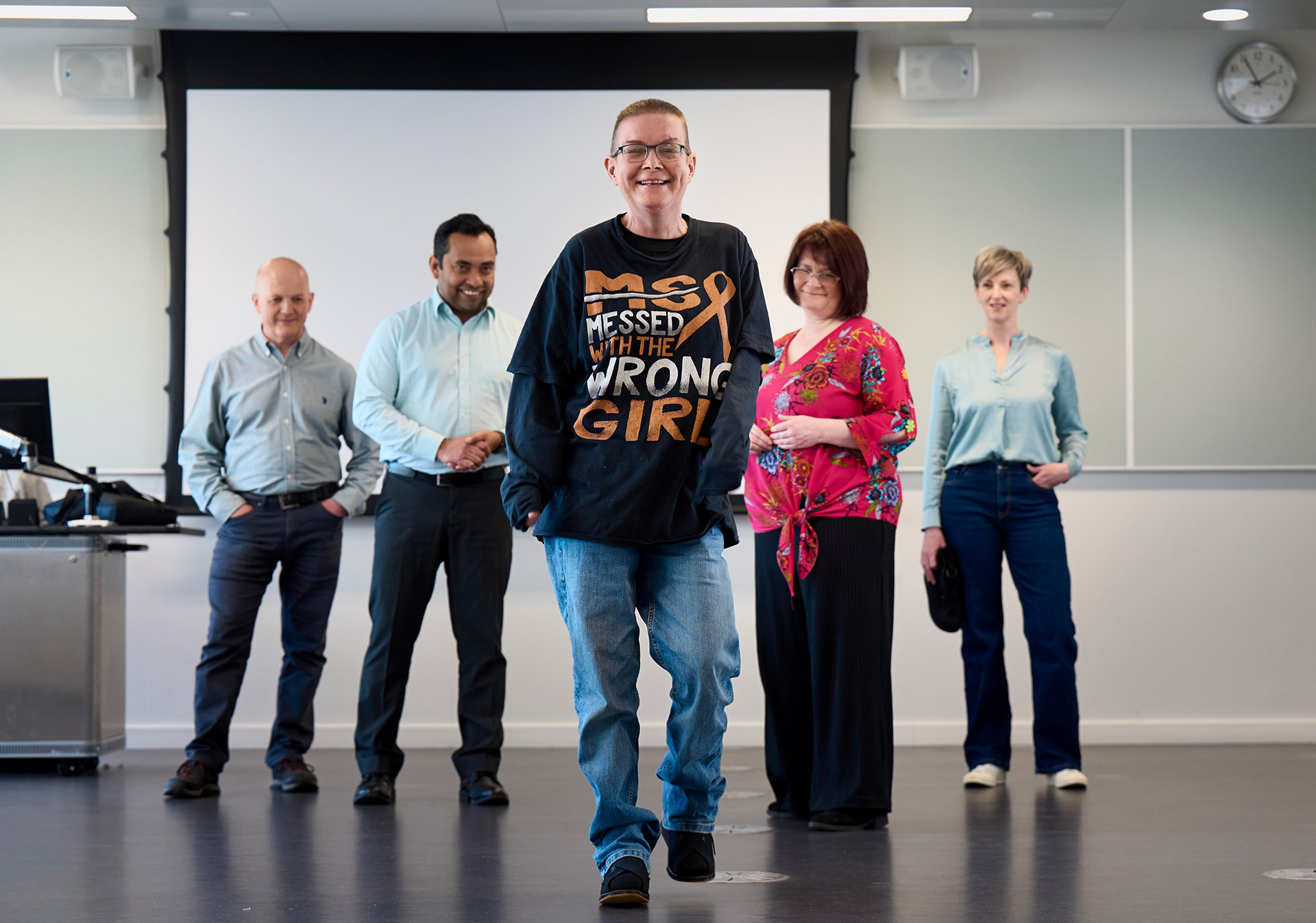
For Jeanette Russell, a former military nurse from Edinburgh, walking had become a daily struggle. Diagnosed with multiple sclerosis (MS) in 2014, she developed foot-drop – a debilitating condition that made each step a calculated effort and every outing a potential hazard. But thanks to QMU’s ground-breaking research, Jeanette’s story has taken a remarkable turn.
The impact of foot-drop
Foot-drop affects the ability to lift the front part of the foot, often causing people to trip or fall. It tends to affect people with MS, stroke, MND and cerebral palsy. For Jeanette, it meant losing confidence, independence, and the joy of simple pleasures like hillwalking. “In my normal boots, I fell down on flat surfaces with no obstacles,” she recalled. “It was frustrating and frightening.”
Like many with MS, Jeanette found herself adapting her life around her condition. The rolling gait she developed while trying to walk, and the mental effort involved in walking without falling, was exhausting.
Jeanette explained: “Simple things that I used to take for granted, like shopping and driving, became really challenging.
“It was embarrassing to go out, because people thought I was drunk. I lost my confidence and I stopped going to social events. My world started closing in!”
A step toward hope
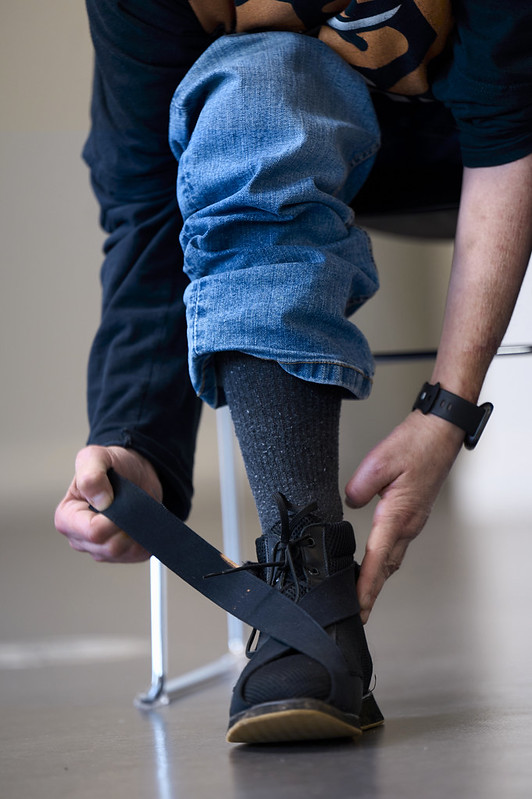
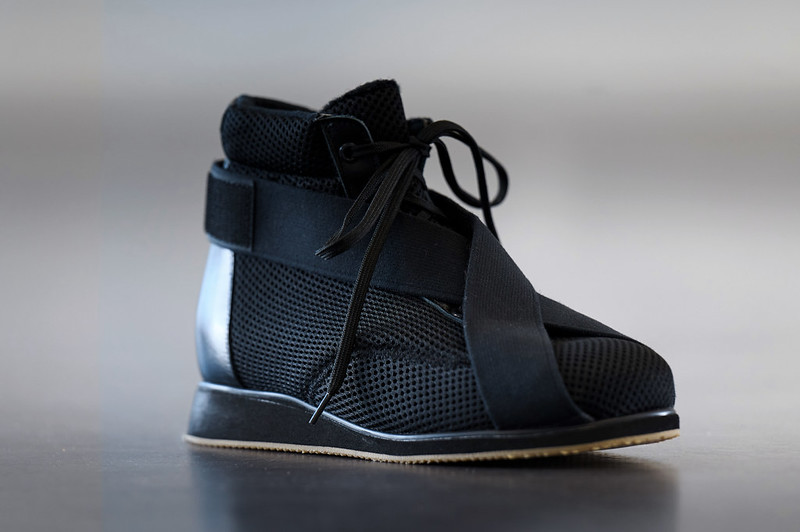
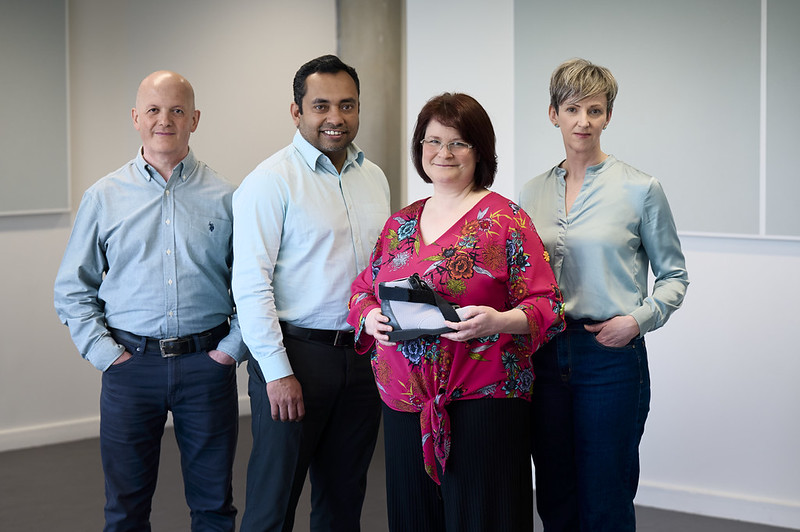
That all changed when Jeanette became one of the first people to trial a new footwear prototype developed by QMU’s Health Design Collective – a research team made up of physiotherapists and podiatrists. The researchers spent years co-designing the shoe with people living with foot-drop. Their goal was simple yet ambitious: create a low-tech, affordable, and stylish shoe that could restore mobility, dignity and confidence.
Jeanette became a central part of the team – ensuring the design of the shoe was properly tested by someone with foot-drop. But she didn’t just test them, she really challenged the different designs of footwear that the team produced. “Initially, I wore them in and out of the house and whilst driving,” she said. “My mobility, speed of walking, gait and confidence improved immensely, and I knew the team was onto a real winner!”
Back to the hills of Glencoe
For Jeanette, the true test came during a trip to her beloved Glencoe, in the Scottish Highlands. Her newfound walking ability saw her venture out onto the hills once more. Navigating steep gradients and slippery rocks, she pushed the shoes to the limit - and they delivered!
“The difference in my walking ability is mind-blowing,” she said. “Using the footwear, I can walk up and down steep pathways and traverse rocks, rough ground and slippery slopes without falling.”
This wasn’t just a return to walking – it was a return to living! Hillwalking, once a cherished pastime, was now back within reach. She’d reclaimed her confidence and her desire for life.
Marching with pride
But the most exhilarating moment for Jeanette came in November 2025, when the shoes allowed her to march with a renewed confidence and pride, past the Cenotaph, at the Remembrance Day Parade in London.
She says: “As a veteran, this meant the world to me. These shoes have given me back my life, and I am immensely proud to be part of the multi-disciplinary research team that has developed these simple, but clever shoes. The researchers have definitely created a game-changing solution for people with foot-drop.”
A simple solution with global opportunities
Although the shoe design is low-tech, its impact is anything but. With an estimate of over 3.8 million people globally affected by foot-drop due to stroke or MS, the potential reach is enormous. Thanks to funding from the National Institute for Health and Care Research (NIHR), the team is now working with manufacturers to bring the shoes to market.
Future plans
The research team is working on the commercialisation of the foot-drop research, with the aim that the shoes will eventually be available through the NHS, for the benefit of a wide variety of people with foot-drop. They also have plans to adapt the shoes for different pursuits and climates such a hiking boots or light weight sandals for people with foot-drop in low-income countries.
Jeanette’s journey is a testament to the power of collaboration between researchers and people with lived experience. She concluded: “This footwear is life-changing and I’m passionate about making sure everyone with foot-drop has access to this incredible footwear.”
From the hills of Glencoe to the streets of London, Jeanette is walking tall again – one confident step at a time.
Click here to visit the press release and watch the video on how Jeanette’s walking was transformed by the shoes
Read more about the Health Design Collective’s exciting research at www.healthdesigncollective.co.uk