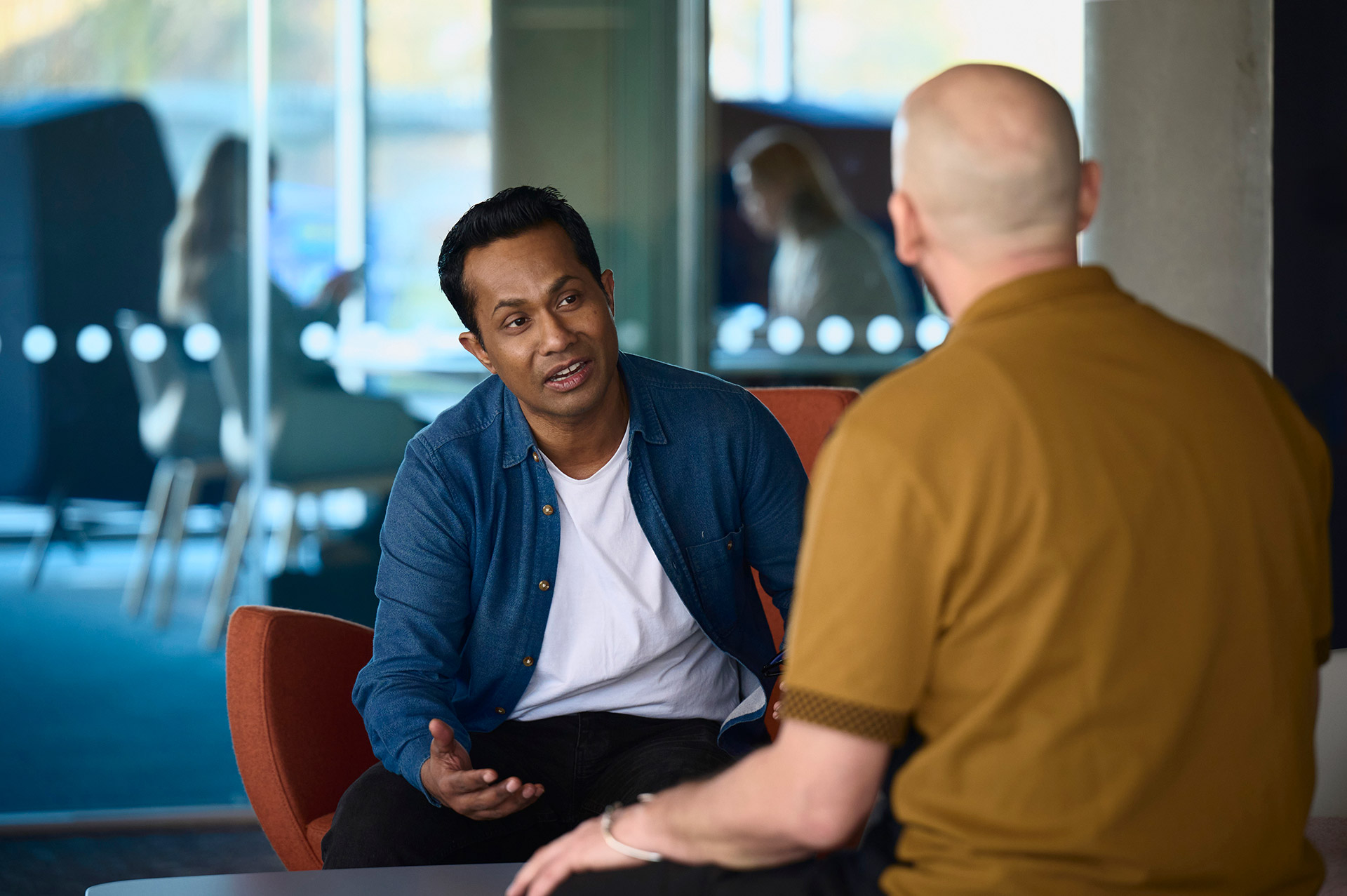
From strangers to neighbours: Building inclusive communities in Scotland
MD Rezaur Rahman’s work has been shaped by experiences of exclusion and resilience. As an Asian, gay, Muslim migrant, he faced rejection from family, society and country. Facing these challenges became his motivation to build bridges across difference and create spaces where trust and respect can flourish.
Today, MD works with Police Scotland as a Community Relationship Specialist, fostering dialogue between minoritised communities and the police. His doctoral research is funded by Police Scotland and his academic path is intertwined with his community work and is a tool he uses to elevate lived experience into conversations with policymakers and institutions.
Beyond his research, MD chairs the West Lothian Community Race Forum, serves as a board director of Theiya Arts, and contributes to Scotland’s International Development Alliance. Through these partnerships, he continues to champion fairness, inclusion, and mutual respect, ensuring that voices too often unheard are brought into the heart of Scotland’s public life.
From strangers to neighbours
When Aisha walked into a community hall in West Lothian last spring, she expected the polite distance that often greets newcomers: nods, smiles, and the invisible barrier that keeps lives running in parallel. What she found instead was a table of people arguing good naturedly over whose stew recipe was best, a teenager patiently showing an older man how to use a smartphone, and a volunteer quietly sorting childcare so parents could join in. That small, ordinary scene is the kind of encounter PhD researcher MD Rezaur Rahman set out to create, and to measure, in his research on social mixing between migrants and long-term residents.
MD believes academic researchers and policymakers should pay more attention to the experiences of individuals residing outside major cities such as Edinburgh, Glasgow, Fife, and Dundee. With the support and assistance of Police Scotland, West Lothian Community Race Forum, West Lothian Hub, Edinburgh & Lothian Regional Equality Council (ELREC), and West Lothian Council, he used mixed methods to answer his research questions.
His research reads like a love letter to community life. He didn’t rely on feelgood festivals or oneoff photo opportunities. Instead, he built a careful, three phase study: listen to people’s concerns, pilot a sixweek programme of structured activities, and then follow up to see what actually changed. The result is not just warm anecdotes but a tested blueprint for turning strangers into neighbours.
MD said: “I wanted to lift the bonnet and show how social activities can enhance social cohesion between migrants and non-migrants. While I may not have the ability to change the world, I firmly believe that I can make a difference in the lives of those around me. I wanted to provide practical solutions to local authorities and policymakers that can help foster social cohesion, reduce racial discrimination and alleviate structural inequalities.”
What he heard in the first phase will sound familiar to anyone with experience of communities that have drifted apart. Fear of judgement, cultural misunderstandings, time pressures and the corrosive effect of hostile public rhetoric all have a part to play. People described practical barriers such as childcare, inconvenient timings and transport that make it easier to stay in one’s own circle than to risk awkwardness. But they also pointed to simple connectors that work including shared hobbies, cooking together, trusted local spaces such as schools and community centres and activities that give everyone an equal role.
The pilot was modest but revealing. By designing events that removed small but decisive obstacles including offering childcare, choosing accessible times and using venues people already trusted, organisers saw more than people simply turning up. They witnessed meaningful contact with neighbours swapping phone numbers, volunteers helping with forms and people agreeing to meet again.
“Those small acts of mutual help are the building blocks of trust,” says MD. “Cohesion is not a slogan, it’s a design problem. Invite people into shared tasks, meet them where they already gather and remove the tiny frictions that stop them coming. When interactions are structured so that everyone has equal status and a common goal, suspicion loosens and conversation begins.”
There’s a political edge to the work, too. By focusing on towns and smaller communities rather than big cities, MD challenges a common blind spot in policy and research. Integration is often framed narrowly as something that happens to refugees in urban centres, but his findings suggest a broader, more inclusive approach where integration is everyday practice for all members of society.
"Social mixing activities can foster genuine connectedness and shift hostile attitudes into mutual respect rather than mere tolerance. By reducing hostility and hate crimes, they can lower costs for police and local services,” said MD. “My findings offer practical interventions for service providers and policymakers to promote meaningful engagement, reduce racial discrimination and structural inequalities, and help the public feel informed and empowered."
Back in the community hall, Aisha left with a recipe card, a phone number and an invitation to a walking group. It’s a small thing, but MD’s study shows how a thousand small things add up. With careful design, modest resources and a willingness to listen, neighbourhoods can become places where strangers become neighbours, and where the ordinary business of life can stitch a community together.